Women in Design
Behind the Brand with Manuela Szewald
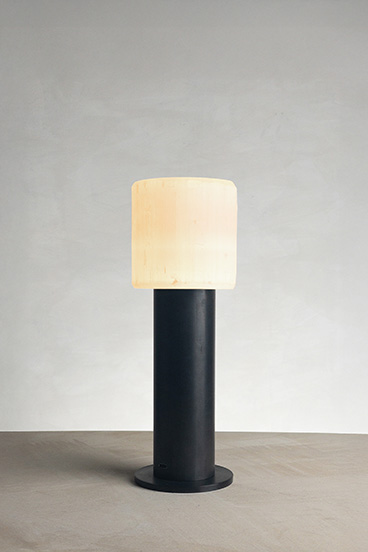
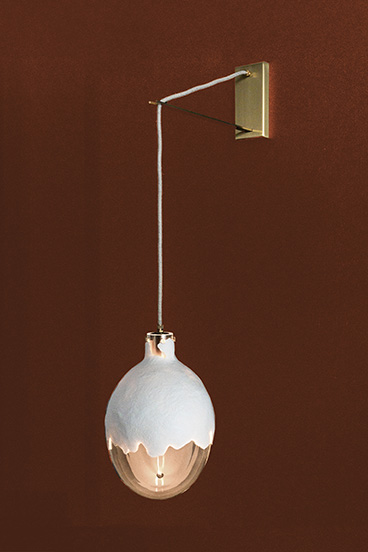
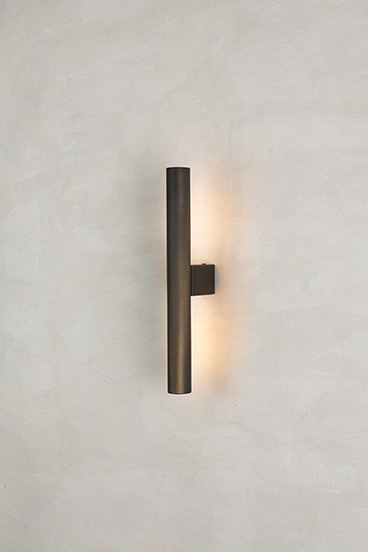
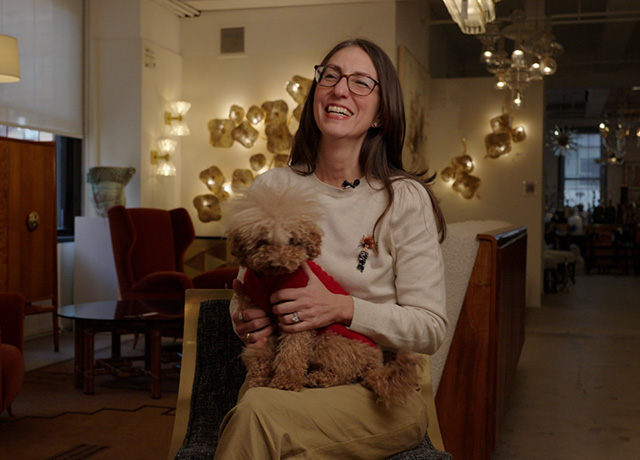
When Manuela Szewald set out to restore her family’s historic farmhouse, she uncovered more than just its past—she rekindled a deep love for interiors and traditional craftsmanship. Now, as CEO and creative director of KAIA Editions, she weaves together design, craftsmanship, and innovation with a sensibility that embodies her love of materiality. With a background in law and finance, she brings a meticulous, considered approach to creativity—ensuring that each design balances structure and artistry. The result yields handcrafted designs that are both timeless and of the moment, and always with an eye toward sustainability. Visit the Kaia Editions U.S. flagship showroom at 200 Lex (suite 424).
1. Tell us briefly about you and your job as it pertains to the design industry.
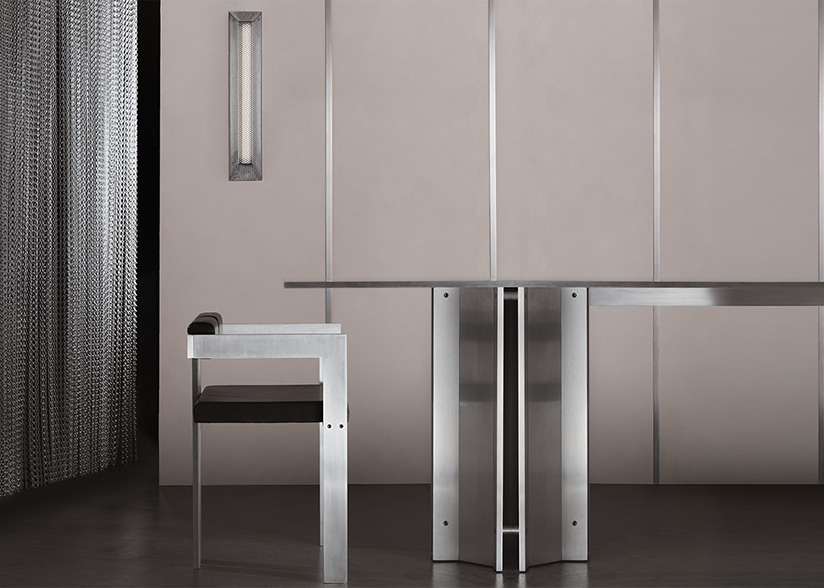
I am the Creative and Managing Director of KAIA, a design-driven lighting atelier operating at the intersection of architecture, craft, and contemporary lifestyle.
My role sits between vision and execution. I oversee the creative direction of our collections ensuring that each piece carries emotional depth, material integrity, and architectural clarity while also shaping the strategic growth of the brand internationally, including our presence in London and New York.
For me, design is never only about aesthetics. It is about permanence, responsibility, and creating objects that outlive trends and are timeless.
2. What made you fall in love with design?
I fell in love with design through architecture. Through the feeling of entering a space that changes your state of mind. As a child, I visited Venice and the Palladio villas, and that experience left a deep impression on me. For me, Venice is the most beautiful city in the world – like a dream. almost surreal. I fell in love with its beauty and that love has never faded. I even got married in Venice and visit as often as I can.
Architecture and design, at its best, are invisible but transformative. It shapes atmosphere, rhythm, and emotion. I was always drawn to how materials, proportion, and light can create quiet power.
Light in particular fascinated me because it is both physical and intangible. It is structured and poetry at the same time.
3. What’s the best piece of advice you have ever received?
For design and architecture: “Build something that can outlive you.”
That advice changed my perspective entirely. It shifted my focus from short-term success to long-term substance. It made me think about heritage, craft, and responsibility not just growth.
In business and in design, depth always wins over speed.
4. What women in the design industry (past or present) do you admire most and why?
I deeply admire Charlotte Perriand.
She combined architectural clarity with human warmth, and she never separated design from life. Her work was strong yet sensitive, structured yet intuitive.
What inspires me most is that she held her ground in a male-dominated era without compromising her voice, and she built her own language.
5. How do you define success for yourself now vs. when you first started?
In the beginning, success meant recognition press, projects, validation.
Today, success means sustainability. It means building a company and a team that is financially stable, creatively independent, and emotionally aligned with my values.
It means creating work I stand behind and partnerships based on mutual respect that also stand behind my values.
6. How have you seen the industry change for women over the years?
There is definitely a visible shift. There are more women-led studios, more female founders, and more acknowledgment of women as decision-makers rather than just contributors.
However, what has truly changed is confidence. Women today are not waiting to be invited they are building their own platforms, brands, and narratives.
The industry is becoming more balanced, but there is still work to do especially in ownership structures and investment access.
That said, challenges remain. Women still have to push harder for visibility, whether to be recognized as industry leaders or included in major conversations. Leadership roles, in particular, are still largely male-dominated and there is room for more balance.
Also, women’s rights in the current political environment are not granted everywhere.
7. Can you share a moment or project that made you feel particularly empowered as a woman in design?
Opening our gallery presence in New York was a defining moment.
Standing in that space, realizing that something conceptual had become physical across continents felt powerful. Not because it was loud, but because it was earned.
It was a moment where I understood that vision, persistence, and resilience can translate into tangible presence, but there is still a long way to go to make us recognised in this Hughes market.
8. How do you stay inspired and push the boundaries of your own work?
I travel, observe, and step outside of the design bubble. Architecture, nature, old craftsmanship, forgotten techniques all inform my work.
But pushing boundaries is less about doing something louder and more about refining something deeper.
I constantly ask: Is this honest? Is this necessary? Will this still feel relevant in 20 years?
Restraint is often the most radical design decision.
Also, collaborations like these with Pauline Leprince are absolutely outstanding, deep, and unbelievably rewarding. A profound source of inspiration stems from my role as a curator and advocate for emerging talents. Engaging with young designers keeps my perspective fluid and responsive- and this exchange continually recalibrates my own thinking in the most vital and constructive way.